

Team makes its mark at Lineman's Rodeo





Recent news
Renewables, solar take center stage at Energy Expo
By Connie Juarez
Randy Humphrey of Elgin, a Bluebonnet Electric Cooperative member, installed solar panels on a shed at his home last year. The system is capable of generating 11.89 kW of electricity. He wanted to lower his electricity costs and was pleased with the results.
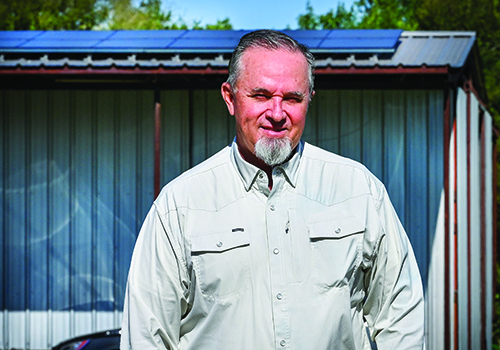
He wanted to share his experience and offer some advice. “Do your research. Know that it still costs you money, but you can control your costs of electricity now and in the future,” Humphrey said.
Humphrey was at the cooperative’s Energy Expo event Oct. 19 to talk to guests. He was joined by Charles Brading and Jeffery Geuea, both Bluebonnet members from Bastrop, who spoke to others about having solar panel systems installed at their homes, the benefits and potential challenges.
Nearly 60 Bluebonnet members and guests — all ready to learn about the latest in residential solar systems, battery energy storage and electric vehicles — attended the event at the cooperative’s headquarters in Bastrop. It was the ninth time the cooperative has hosted the event.
Speakers, information sessions, displays and Bluebonnet employees provided information about renewable energy systems and answered attendees’ questions.
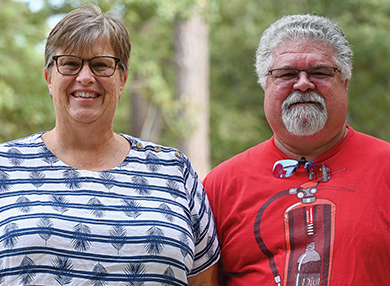
Members Diana and Loren McGuire, who plan to move from Austin and build a home in Caldwell County, attended the Energy Expo to gain insight into adding a solar system into the early stages of home construction. “We didn't know much about solar energy at Bluebonnet and wanted to understand it better,” Diana McGuire said.
Her biggest takeaway was how to get an accurate comparison when considering different installer proposals, she said.
The program began with presentations by representatives of the Texas Solar Energy Society on the fundamentals of home solar energy systems. The society also hosted solar and battery-system vendors to answer visitors’ questions on site. The Texas Solar Energy Society is a statewide nonprofit organization committed to advancing solar energy in Texas.
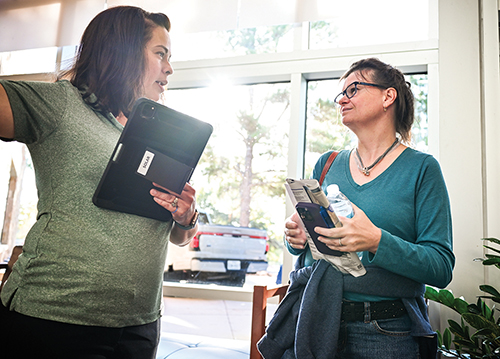
Throughout the three-hour event, Bluebonnet employees explained the specifics of connecting energy systems, ways to monitor electricity consumption and how to track excess power generated by a solar system that is returned to the electric grid.
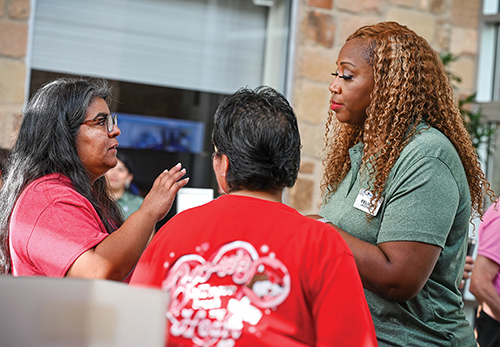
Currently, about 3,500 Bluebonnet members use solar energy systems — approximately 15% more than last year. “This really shows how much interest there is in alternative energy in the area,” said Bluebonnet member service supervisor Erica Contreras, who helped plan the event.
“We were really pleased with the turnout,” she said. “It was great to see so many of our members engaged and excited about renewable energy.”
Story by Pam LeBlanc
Photos by Sarah Beal
I probably look goofy.
I’m holding what looks like a pingpong paddle, standing on what looks like a miniature tennis court and attempting to whack what looks and feels like a Wiffle ball. Pickleball mania has taken over the Bluebonnet Electric Cooperative region, and I’m determined to find out why.
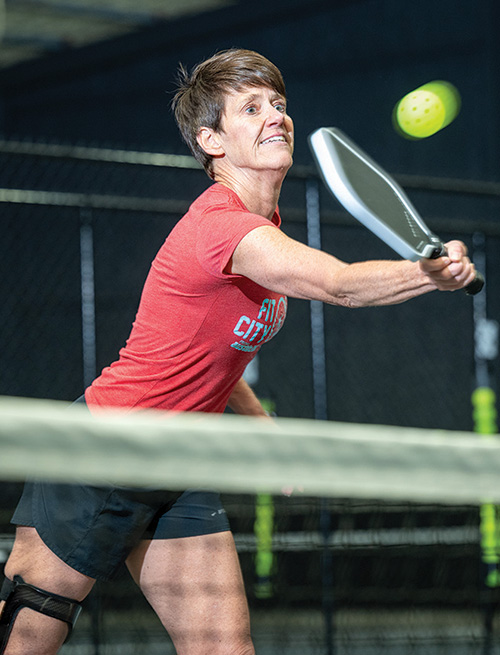
Here in the air-conditioned comfort of Lost Pines Pickleball Club in Bastrop, a few pickleball enthusiasts are showing me the finer points of the fastest-growing sport in America for three years in a row, according to the Sports & Fitness Industry Association.
Unfortunately, after about 30 minutes of thwacking, I lower my paddle and admit defeat. My partner and I have been officially “pickled,” meaning we’ve lost the match, 11-0. I’d like to blame the brace on my knee for the less-than-gold-medal performance — I’m recovering from ACL surgery — but I think it’s more about my lack of skills. This mashup of tennis, badminton and pingpong might look simple, but to become top pickle, players need practice.
The game traces its origin to 1965, according to USA Pickleball. That’s when Joel Pritchard and some friends were looking for a way to entertain their families. Pritchard, who had been a member of Congress from Washington state, had an old badminton court, but not enough rackets to go around. So the group gathered up a few pingpong paddles, found a Wiffle ball and strung up a net.
There’s nothing remotely picklelike in the sport, so the source of the name is hotly debated. Some say the plastic ball used in those first games belonged to Pritchard’s dog, Pickles, who would chase and occasionally abscond with the ball. Others say the name came from the term “pickle boat,” which refers to a crew of randomly selected rowers in a race.
Regardless, after a while, pickleball got popular. The U.S. Amateur Pickleball Association was formed in 1984, and by 1990 people in all 50 states were playing. Pickleball's popularity exploded during the coronavirus pandemic. People could play outdoors, stay socially distant, get some exercise and have much-needed social interaction. Play increased by more than 223% in the last three years.
Today an estimated 36.5 million Americans – some say that number is low — play pickleball, and more than 50,000 courts are located across the U.S., according to 2023 statistics from the Association of Pickleball Players. The organization had 78,766 members and sanctioned 195 tournaments last year, including the national championships held in Farmers Branch, Texas.
Pickleball is booming in Texas, with more than 3,500 individual courts at more than 850 locations, according to Pickleheads, an online site dedicated to the sport. That doesn’t include private courts, or spur-of-the-moment setups on basketball and tennis courts, or any asphalt or concrete surface with the required 20-by-44-foot space.
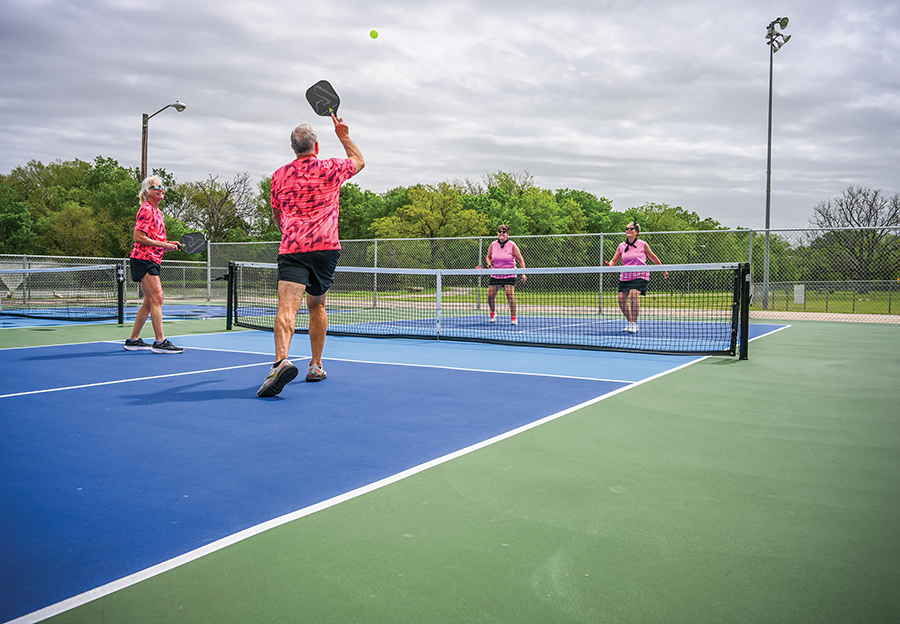
The easy-to-play but nuanced game has spread beyond cities and moved into rural communities, including those in the Bluebonnet region. Courts, clubs, leagues and pickup games are scattered across the cooperative’s 3,800-square-mile service area.
Today’s session at Lost Pines wasn’t my first attempt at pickleball. My husband and I picked up a pair of beginners’ paddles, met some pickleball-playing friends, set up a portable net on a basketball court and practiced hitting balls earlier this year. Sports that require serious hand-eye coordination are not my thing, but a little time spent smacking that airy ball around gave me confidence: I can do this.
That led me to Lost Pines Pickleball, 1099 State Highway 71 in Bastrop, for some training. The facility, which opened in November 2023, is one of the largest in the region with 13 courts — nine in an air-conditioned, indoor facility and four outdoors, lighted. Members play for $99 a month, and nonmembers pay $7 per person, per hour to play there.
Not far from Lost Pines, at 141 Tahitian Drive, another large facility — with 10 lighted outdoor courts — is run by the Bastrop Pickleball Association. Dues there are $20 a month, or $200 a year, but visitors are welcome to play a few times for free. The public can play at free clinics at 6 p.m. every Tuesday.
But most courts across the region are open to the public for little to no cost, including Fisherman’s Park, 1200 Willow St., and Bob Bryant Park, 600 Charles Blvd., in Bastrop.
Other residents of the region are playing pickleball from Brenham to Caldwell, Smithville to Bellville and lots of courts in between. See a list of Bluebonnet-area courts below.
Pickleball’s appeal goes beyond being simple: It is inexpensive and low-impact. At the recreational level, it’s a fun way to goof around with friends and family. A pair of inexpensive beginner wooden or fiberglass paddles that can cost less than $25 and a regular pair of sneakers are sufficient. The scoring throws some folks off, but our guide to the game on Page 20 can help.
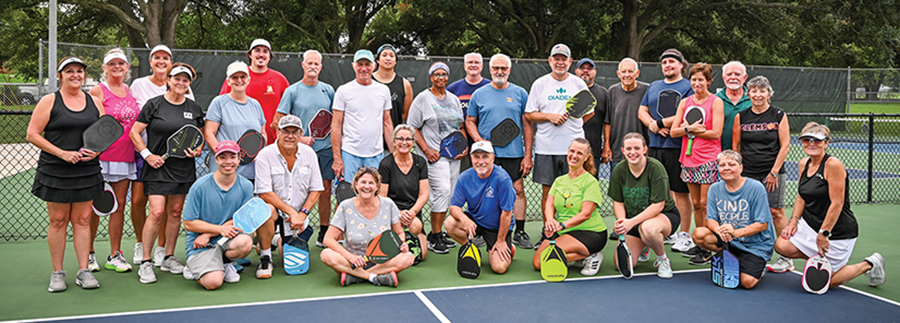
At competitive levels, pickleball is fast-paced, requiring agility, dexterity and a bit of power. Get caught up in the sport, and it can get pricey: Pro-level paddles can cost more than $200, and even the balls can get fancy. I tried a $150 paddle made by Pickleball Apes, and it was lighter and more responsive than my cheap one.
Around the Bluebonnet service area, picklers, the nickname for those who adore the sport, are eager to spread the word.
Vicki Bruce of Brenham, a 69-year-old former physical education teacher, started playing about eight years ago, after her husband passed away and a friend suggested they try. Brenham didn’t have any public courts then, so the pair persuaded city officials to set up four courts using temporary nets on two old tennis courts. People started showing up. The city eventually marked off six pickleball courts and installed permanent nets at Jackson Street Park, 1300 S. Jackson St.
“Seniors are an underserved population when it comes to anything active,” Bruce said. “Before you knew it, we had 40 or 50 people playing. Now we have 190 people in our club.”
Pickleball, she says, offers something more than a fun game to play.
“We’ve had people who have had cancer, lost husbands, gone through divorce, and some who are just lonely,” she said. “I think it fills whatever need you’re looking for, whether it’s social, competitive or exercise. I didn’t realize all the benefits I was going to gain when I started, but these people are closer than family.”
Bruce Forester lives near Lockhart and started playing about eight years ago. He and his wife, Ann Forester, would drive to the San Marcos Activity Center’s indoor courts to play until Covid shut things down. In 2021, he and some other members of First Methodist Lockhart asked trustees if they could set up a pickleball court in the church’s activity center on Monday and Wednesday afternoons. They’ve been playing – and attracting others – ever since.
“A lot of it is social,” Forester said. “You’ll meet people you never knew, never thought you’d make friends with. Some are new to the game and are just now learning, while others are veterans who want to compete.”
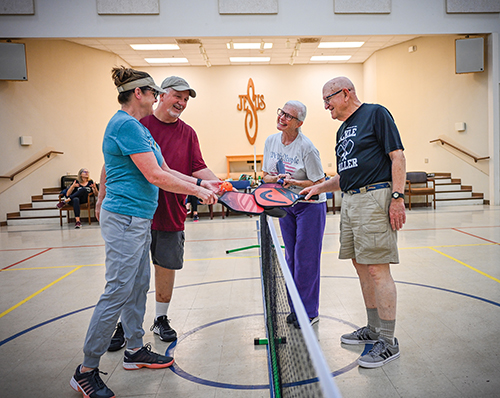
You don’t have to be a super athlete to get something out of the game, said Lanell Beckles, who once coached tennis in Maine and now works as a fitness and pickleball coach. “It awakens the ability to enjoy sports for a lot of people who never played sports.”
Beckles discovered pickleball a few years ago when he saw some people playing at Fisherman’s Park in Bastrop. A player spotted him watching and suggested that he give it a try. “I made all the mistakes,” Beckles said. “I stepped into the ‘kitchen.’ But I needed a competitive sport I could play again.”
Beckles stuck with it, drawn by the camaraderie and the welcoming vibe. “Pickleball is so diverse. You can play with a beginner or a pro, and you’ll all get something out of it,” he said.
Back at Lost Pines Pickleball Club, after my defeat, I’ve plopped down on a chair. A TV on a nearby wall is streaming professional pickleball players in action, where balls fly, players pivot and things move so quickly I can hardly keep up. It’s a far cry from the mellow game I just finished.
“Watch what the pros do,” Beckles, the coach, told me. “That’s one way to get better.”
He recommends beginners take a lesson to familiarize themselves with the rules and to avoid developing bad habits. “Most people when they start say, ‘This game is easy and I can figure it out.’ But you don’t really understand it until you play with people who are better at it, and you understand the rules and nuances,” he said.
After a few hours of trying, I know he’s right. I’m motivated to get back out and learn some skills. It doesn’t matter if I look goofy, and I don’t need to play on a fancy indoor court.
This sport’s got at least one more new fan — me.
Pam LeBlanc writes about fitness, adventure and recreation in regional, state and national publications.
Where to play pickleball in the Bluebonnet region
• Bastrop Area Pickleball Association, 141 Tahitian Drive, Bastrop
• Fisherman’s Park, 600 Hill St., and Bob Bryant Park, 600 Charles Blvd, Bastrop
• Lost Pines Pickleball Club, 1099 Texas 71 W., Bastrop
• Bellville Pickleball Club, 59 S. Bell St., Bellville
• Jackson Street Park, 1300 S. Jackson St., Brenham
• John E. Hejl Park at Davidson Creek, 1105 Commerce St., Caldwell
• Dale Community Center, 47 Civic Drive, Dale
• Elgin Recreation Center, 361 N. Texas 95, Elgin
• Veterans Park, 118 E. Richmond St., Giddings
• West End Community Park, 725 Main St., Industry
• Pride High School gym annex, 419 Bois D'Arc St., Lockhart
• Frisch Auf! Valley Country Club, 575 Country Club Drive, La Grange
• First Methodist Lockhart activity center, 313 W. San Antonio St., Lockhart
• Rio Vista Courts, 555 Cheatham St., San Marcos; bit.ly/4crFall
• San Marcos Activity Center, 501 E. Hopkins St., San Marcos
• Smithville Recreation Center, 106 Royston St., Smithville; bit.ly/3X5bfLf
On the courts
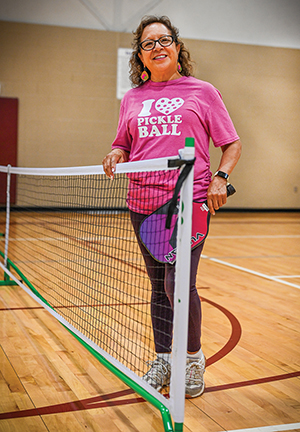
Josie Martinez, Martindale
When did you start playing? I started in September 2022, after retiring, following a friend's suggestion to try it for exercise.
How did you get hooked? Immediately. It was a lot of fun. The people I play with range from 50 to 90 years old.
Fun fact: I trained for two 5K races last year by playing pickleball and fetching balls. I placed first in one race and second in another in my age group.
Tip for beginners: You just have to get out there and try it.
Linda Gaas, Somerville area
How often do you play? I play pickleball at least four times a week and have traveled to Arkansas, Oklahoma and Alabama for pickleball tournaments with a friend. I’m the USA Pickleball ambassador for the Caldwell area.
Where do you play? Mainly at the public courts at Davidson Creek Park in Caldwell. Players gather at 7 or 8 a.m. daily for open play. I also travel to Brenham, Navasota, Bellville, Bryan/College Station and Bastrop to play.
In her spare time: I’m a retired accountant with five grandchildren. I love to spend time with them — if I’m not at a pickleball tournament.
Tip for beginners: Don’t get frustrated and take your time. It’s a learning process.

Lanell Beckles, Bastrop
How did you get hooked? Coming from a tennis background, I found pickleball to be easier to pick up and more community-based. I’ve met a lot of people in pickleball, but I also found a sport I can excel at without tearing down my body. Easy to start, not easy to master.
In his spare time: I’m a fitness trainer and pickleball coach. I also love riding my motorcycle, going to movies, and helping others with their social media content creation. I’m helping another company start a podcast and improve their brand recognition.
Tip for beginners: Watch a high-level pickleball match. When you see how that kind of game is being played, you’ll know what to strive for. You’ll get an idea of how to win points — and it’s not hitting the ball hard every chance you get. Also, play as much as possible.
Bruce Forester, Lockhart area
When did you start playing? About eight years ago. My brother-in-law introduced me to the game while on vacation. It was fun, and I saw the potential for me: I am a heart patient, and it was a good cardio workout.
Fun fact: I have the most fun when I’m playing with others who have the same skill level I have.
In his spare time: I enjoy nine-pin bowling.
Tip for beginners: Find a wall and bounce the ball off of it to build up your hand-eye coordination. It will also build your confidence. Don’t be shy — jump in feet first.
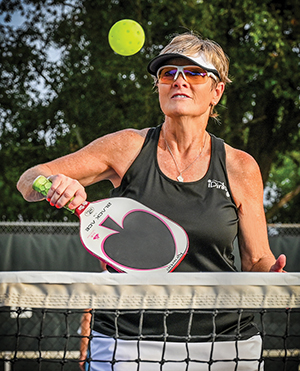
Vicki Bruce, Brenham
When did you start playing? I learned about pickleball from my friend Helen, whom I met through a grief recovery group after we both lost our husbands. Helen heard about the game while visiting friends in Galveston about eight years ago. After her trip, we found someone to teach us how to play.
Why do you love it? It continues to amaze me how pickleball brings people together who would not normally be together. I play with people with a wide range of backgrounds, personalities and skill levels. But when we come to the pickleball court, it’s one big family.
Fun fact: I’ve probably got two dozen paddles. I have my favorite, a ProKennex, and I love that paddle because it’s gentle on my elbow and shoulder. I always go back to it.
Tip for beginners: Stay back and don’t rush the net.
Mike and Wanda Royce, Lexington
Where do you play? We play everywhere we go. We love the group in Brenham; we play at Fisherman’s Park in Bastrop on Thursday and Saturday mornings. We have a Tuesday morning group in Caldwell. We always take our pickleball bags with us wherever we go. We have met so many wonderful people through pickleball.
Fun fact: People ask us how many days a week we play. We say “all of them that end in a Y.”
Tip for beginners: Play as often as possible and try to play with people of all ability levels. Learn from advanced players and help teach the newbies.
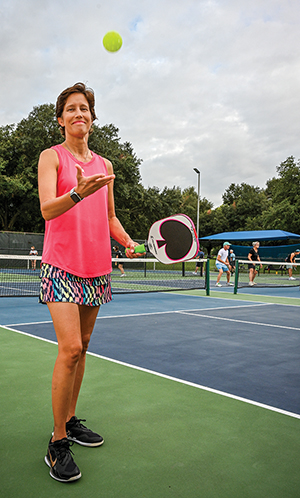
Lisa Keesler, Brenham
When did you start playing? In March of 2014, a CBS News segment about a little-known sport called pickleball caught my attention. I ordered a paddle and a few balls and hit against the practice board at the tennis courts a few times.
How did you get hooked? On February 24, 2017 — the first day I played the game! I met Vicki Bruce at the courts along with two other players, and we laughed and had an amazing time. She was so encouraging. We have since become doubles partners, and have competed and won in many tournaments. As USA Pickleball and US Senior Pickleball Ambassadors in the region, our role is to promote the sport and share our love for the game with others.
Fun fact: My secret sauce is Dr Pepper! It’s what keeps me going. There's no water in my water bottle.
In her spare time: I'm a full-time office nurse in a busy practice. Sunday mornings and Wednesday nights are reserved for church. All other times are "game on!"
Tip for beginners: Take your time. It’s a fast-moving game. You have to think and react fast, but you’ve got more time than you know. Relax, slow down and see your shots. And have fun!
HOW TO PLAY PICKLEBALL
The game
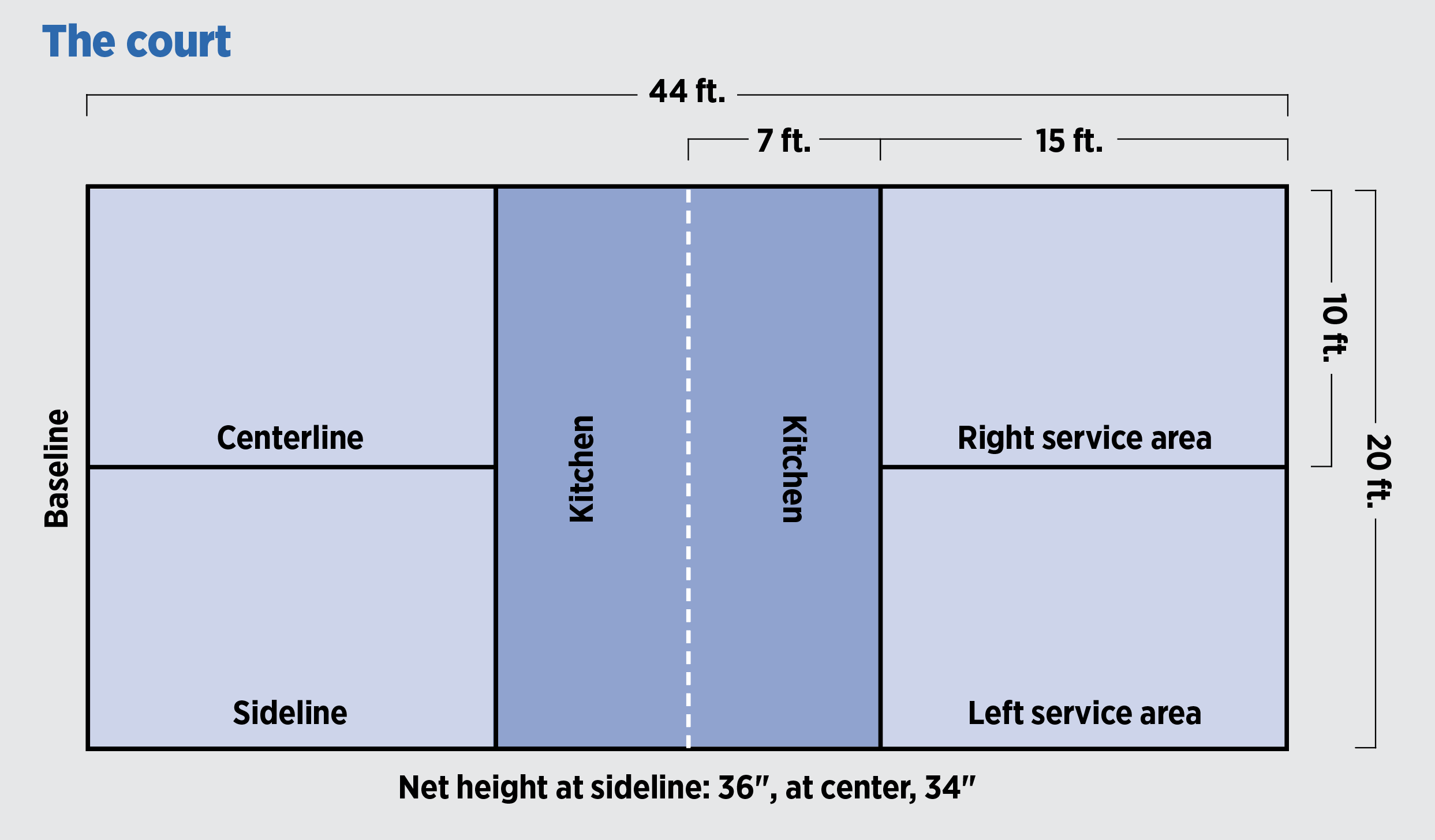
- Each rally begins with a serve — a player on the right side of the court serves from behind the baseline diagonally to opponent’s service area. The ball must land beyond the ‘kitchen.’ Serves are typically underhanded.
- The ball must bounce once on each side before it can be volleyed (hit in the air).
- A point is lost when ball is hit out of bounds or into the net, bounces twice on one side, cannot be returned or if a serve doesn’t go beyond the kitchen.
- When the ball is within the kitchen area near the net, it must bounce once before being returned. No volleys in the air if you are in the ‘kitchen.’
- You only win points on your or your teammate’s serve. You keep serving until you lose a point. Then your teammate serves. Then the other team’s players serve.
The gear
- Paddles: 2 to 4 wooden or composite paddles start at less than $25 and can go up to more than $300. Get one that is USAPA, or U.S.A Pickleball Approved. Paddles get pricier based on attributes like control vs. power, sweet-spot size, ability to generate spin and more.
- Balls: Pickleballs are made with different plastics, weights, hardness, number of holes, plus bounce and speed levels. Some are better for indoor play. A three-pack starter set is about $8.
- Regular sneakers, although any athletic shoes made for court play will do.
- Hat, sunscreen, water
The lingo
Bagel or pickled: Shutout game; in standard pickleball, an 11-0 finish
Dink shot: Soft shot that barely clears the net and plops into non-volley zone
Falafel: Short shot caused by hitting the ball with too little oomph
Kitchen: Non-volley zone, a 7-foot-deep section of court on either side of the net
Opa!: Sometimes shouted after third shot, when open volleying starts Pickle!: Warning shouted by server letting others know they are about to serve
Pickler: Pickleball enthusiast who can’t stop talking about the sport
Pukaball: Alternate name for pickleball, used primarily in Hawaii Volley
llama: Illegal move, when player hits a volley while in the kitchen
Can’t get enough? Tune in to pickleballtv.com for nonstop streaming pickleball action.
Sources: USA Pickleball, Sports & Fitness Industry Association, Association of Pickleball
Professionals, pickleheads.com
Download this story from Bluebonnet's Texas Co-op Power magazine»


News releases
Story by Alyssa Dussetschleger
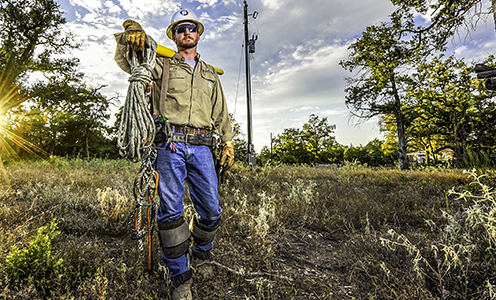
Brooks Kasper was 19 when he became a lineworker intern at Bluebonnet Electric Cooperative. He did not know many details about the job, the rigorous training he would receive or the welcoming culture of Bluebonnet Electric Cooperative.
“I was excited to get started, but didn’t realize what was ahead in my career,” said Kasper, who is now 23.
Kasper was one of the first line-worker interns at Bluebonnet. For some in that group, it was their first full-time job. “They looked young, some looked a little scared and nervous, but I could tell they were excited to be there, eager to learn and that they were going to do well,” said Aaron Seeliger, Bluebonnet’s assistant superintendent of operations for the co-op’s Maxwell and Red Rock service centers.
The line-worker internship program at Bluebonnet began in 2018. The program focuses on hiring local candidates and introducing them to electric linework and Bluebonnet’s focus on safety and service to its members.
Kasper and the other interns spent their first six months in the classroom at a Bluebonnet facility, learning about safety, which is of utmost importance at Bluebonnet. Interns also received technical instruction on linework, earned climbing certifications and obtained commercial driver licenses. Then they began training in the field alongside journeyman lineworkers. Now six of them have become U.S. Department of Labor-certified journeyman lineworkers and Bluebonnet’s first graduates of the internship program.
Their names and hometowns are: Ty Duesterheft from Maxwell, Dylan Dussetschleger from Lexington, James Flores from Elgin, Zackary Handrick from Somerville, Brooks Kasper from Giddings and Tra Muston from Rockdale.
They received their certification in October 2021 after more than four years, which included 672 hours of technical instruction and 8,000 hours of on-the-job training. They will work with crews out of Bluebonnet service centers in Bastrop, Brenham, Giddings, Maxwell and Red Rock.
The youngest intern graduate, Dylan Dussetschleger, grew up in Lexington and started the program at 18. Now 22, he works across the 3,800-square-mile Bluebonnet service area, performing maintenance on power lines and poles, restoring power and repairing equipment. “I never knew when I started I’d find a career I loved. The intern program has changed my life,” he said.
The most recent class of interns began their training in July 2021. “The new intern class will gain more knowledge and have more experience to put them farther ahead,” Duesterheft said. “New interns are placed in the field and begin observing lineworker crews their first week.”
Handrick, who works out of the cooperative’s Brenham Service Center, looks forward to teaching new interns. His advice for them is to take it slowly. “You’re not going to learn everything after your first day on the job,” he
said.
In addition to the intern graduates, five other employees completed Bluebonnet’s apprentice lineworker program and received Department of Labor journeyman certification in 2021. They are Trevor Eckert of Brenham, John Horton of Ledbetter, Frank Garza of Kyle, Joshua Tristan of Kyle and Matt Waltzer of Bastrop. They work with crews out of Bluebonnet service centers in Brenham, Bastrop, Giddings and Maxwell.
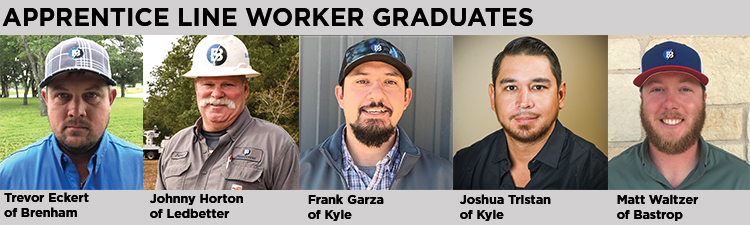
Apprentices go through approximately four years of coursework and on-the-job training to earn their certification. Some come to Bluebonnet with previous linework experience, while others are new to the trade.
Bluebonnet began offering an apprentice program in 2004. There are now 28 apprentices (including 11 who began in the intern program) and 52 journeyman lineworkers on staff.
 Two other Bluebonnet employees also received certifications for specialized work. Justin Siegeler of Giddings completed the Electric Meter Tester Certification program through the Northwest Lineman’s College and received his Department of Labor certification last year. The four-year electric meter tester certification consists of 30 proficiency exams and 8,000 hours of on-the-job training.
Mason Mertz, a control center operator who lives in Bastrop, completed a 10-month program and proficiency exam to obtain his System Operator Certification from Northwest Lineman’s College in 2021.
INTERESTED IN BECOMING A LINEWORKER?
You can find applications for these and other career opportunities, at bluebonnet.coop. Click on Careers at the bottom of any page on the website.