



Team makes its mark at Lineman's Rodeo





Recent news
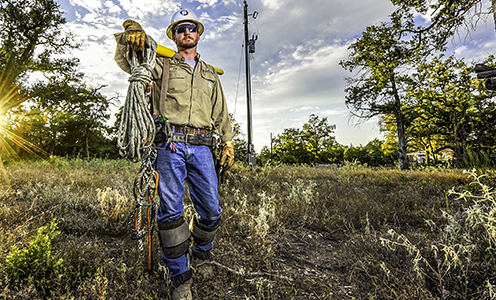
Bluebonnet is sending a senior journeyman lineworker team, three journeyman lineworker teams, 12 apprentice lineworkers, 12 competition judges and a barbecue team to the Texas Lineman’s Rodeo at Nolte Island Park near Seguin on July 18.
The rodeo tests the skills that lineworkers rely on daily, from climbing poles to repairing equipment. Other challenges include a dexterous pole climb while carrying a raw egg without breaking it and a pole-top rescue of a life-sized mannequin, simulating the rescue of an injured coworker. Judges evaluate speed, technique and adherence to safety standards, highlighting the precision and preparation required in real-world linework.
Beyond the competition, the rodeo celebrates the electric utility community. Bluebonnet teams, joined by family and friends, will cheer on their peers. The public is invited to watch the events along the Guadalupe River and see firsthand the skill and dedication of lineworkers.
Learn more at tlra.org, and get live event updates on Bluebonnet’s social media.
Bluebonnet and LCRA representatives present a $25,000 grant to Martindale Fire & Rescue to purchase new extrication tools. The grant is part of LCRA’s Community Grants program. Pictured, from left, are Brailey Bezio, firefighter and EMT-B; Josie Martinez, Calwell County Emergency Services District No. 3 treasurer; Philip Settepani, firefighter; Laura Sanchez Fowler, City of Martindale mayor; Korey Gebert, firefighter and EMT-B; Matt Tanksley, fire and rescue lieutenant and EMT-B; Tony Garza, firefighter and EMT-B; Margaret D. “Meg” Voelter, LCRA board member; Milton Shaw, Bluebonnet Director; Larry Turner, firefighter and EMT-B; Jo Anna Gilland, Bluebonnet Lockhart-area community representative; Elizabeth Ehlers, LCRA regional affairs representative; Bill Hamilton, Caldwell County ESD No. 3 president; Bill Glaze, fire & rescue president; and Joe Abatecola and Alyssa Decker, firefighters.
Martindale Fire & Rescue will soon purchase new extrication tools to help firefighters rescue patients trapped after serious vehicle collisions, building collapses or other emergencies, thanks to a $25,000 grant from Bluebonnet Electric Cooperative and the Lower Colorado River Authority.
The community grant, along with $8,025 in matching funds from the fire department, will provide the new equipment for a brush truck the department is purchasing with assistance from the Texas Forest Service HB2604 grant program. The new truck will be used for grass and brush fires, vehicle collisions, medical emergencies and other rescue calls.
“The grant is helping us add state-of-the-art extrication tools that make our department's new brush truck a fully equipped rescue apparatus,” said Chris Germer, fire chief of the Martindale Fire & Rescue. “These tools give us access to patients trapped in vehicles, whether a door is wedged shut, a vehicle is overturned or we have to cut parts of the car away to reach someone safely.”
The department serves a 28-square-mile area that includes Martindale and unincorporated parts of Caldwell County, including busy corridors connecting San Marcos, Houston, Luling, Lockhart, Maxwell, Redwood and Staples. Its district includes State Highway 80, Highway 142 and State Highway 130, where firefighters and EMS regularly respond to vehicle collisions and rescue calls.
Germer said the department has an older set of extrication tools, but the equipment is showing its age and is carried on a larger engine that fewer members are certified to drive. The new rescue truck will be smaller and easier for more department members to deploy.
“These battery-operated HURST tools are among the strongest and most durable extrication tools available today,” Germer said. “Vehicles are being built with stronger materials and more layers of steel, and we need equipment that can help us get to people when seconds matter. Having these tools on a smaller rescue truck means more of our firefighters can get them to the scene quickly, even in rain, rough terrain or more difficult response conditions.”
Martindale Fire & Rescue also is adding paid daytime staffing to supplement its volunteer program. Germer said the additional staffing helps ensure trained firefighters and medical personnel are available when many volunteers are at work.
“We have dedicated volunteers who continue to serve, and we’re adding certified firefighters, EMTs and paramedics during the day to strengthen our department,” Germer said. “Our goal is to make sure someone is ready to respond whenever the community needs help. We are investing in the equipment, training and personnel needed to provide professional service around the clock.”
This is one of five grants recently awarded by Bluebonnet and LCRA through LCRA’s Community Grants program, which helps volunteer fire departments, local governments, emergency responders and nonprofit organizations fund eligible capital improvement projects in LCRA’s wholesale electric, water and transmission service areas. Bluebonnet is one of LCRA’s wholesale electric customers and is a partner in the grant program.
Applications for the next round of grants will be accepted in July. More information is available at lcra.org/grants.
Rural libraries quietly anchor lively community connections. Inside them, the next chapter of small-town life is being written.
By Addie Broyles l Photos by Sarah Beal
A century ago, life in our rural communities was simpler. Family, church, school and community formed the foundation for small towns across the Bluebonnet Electric Cooperative region.
In the heart of those towns were libraries — quiet places where generations gathered to read, learn and enjoy the quiet company of a good book.
The towns have changed, but the libraries remain, evolving to offer everything from high-speed internet and digital media to classes, meeting spaces and community programs. Books still fill the shelves, but neighbors fill the rooms.
Whether historic landmarks like the Dr. Eugene Clark Library, built in Lockhart in 1899, or relative newcomers like the 16-year-old Garfield Library in Del Valle, libraries remain the beating hearts of the communities around them.
Technology in the digital age has expanded libraries’ reach, opening new avenues for patrons.
“We are service workers at heart,” said Brenham librarian Tammy Murphy. “If there’s a need, we’ll try to fill it.”
Like many librarians in the Bluebonnet region, Murphy started her career as a teacher before she landed her dream job at the library.
Other area librarians echo Murphy’s comments. Small-town libraries act as bridges between schools and social services and area residents, said Jessi Akins, director of Giddings’ public library.
Libraries keep people connected, Akins said, and basic digital services, like teaching someone how to pay bills online, help people operate in a tech-reliant world. Many rural residents who work remotely use community library facilities for video conference conversations or to host virtual work meetings.
Libraries serve as learning hubs but are also places where people of all ages gather to express creativity and find a sense of community. Lego clubs, sewing classes and writing groups are among the many ways Bluebonnet-area libraries attract residents.
Head librarian Judy Bergeron has worked at the Smithville Public Library for 18 years and has seen more than just the transition from a physical card catalog to a digital one.
“It’s not uncommon to hear that we’re not going to need libraries because nobody reads anymore, but we are so much more than just books,” Bergeron said.
Some libraries create teen programming to attract young people interested in everything from crafts to filmmaking. In Brenham, a teen advisory board helps the library develop classes and activities for young people. Smithville’s library offers teen-oriented activities like tie-dyeing and driving-test prep as well as open art studio time for elementary-aged kids after school, followed by a teen video game night.
“It’s like that old Cicero quote,” Bergeron said, speaking of the Roman philosopher and statesman. “If you have a garden and a library, you have everything you need.”
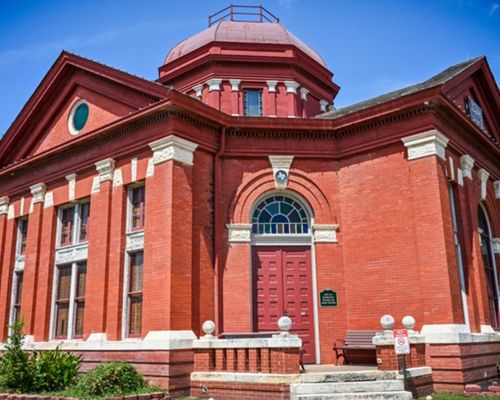
Dr. Eugene Clark Library
Address: 217 S. Main St., Lockhart
Hours: Open 8:30 a.m.-6 p.m. Monday, Wednesday and Friday; 8:30 a.m.-7 p.m. Tuesday and Thursday; 8:30 a.m.-3 p.m. Saturday. Closed Sunday.
Phone: 512-398-3223
Website: clark-library-lockhart.org & lockhart-tx.org/page/library_home
Founded in 1899, the Clark Library is Texas’ oldest continuously operated library housed in its original building. Named for the medical doctor who bequeathed $10,000 for its books and construction, the red, two-story brick building was designed by architect T.S. Hodges, who also designed Caldwell County’s castlelike jail. Speakers, theatrical productions, recitals and concerts were hosted there for decades. In 1956, performance space gave way to books and community activities.
What sets it apart: In addition to its history, the library was expanded in 1996 to include the Masonic Temple next door, now known as the library’s annex. The annex’s third floor is where Lockhart’s City Council meets. The library’s interior has been used as a set location for a few movies, including “The Faculty” and “Secondhand Lions.”
Programs: In addition to storytime, children’s reading hours, adult craft nights and teen and youth events, the library hosts summer reading and “Fun at the Library” programs. There are several computers with high-speed internet for public use and a reading machine for visually impaired patrons.
How to get a library card: Provide proof of residence; free for Lockhart residents or property owners; $10 annual fee for those living outside Lockhart.
Nancy Carol Roberts Memorial Library
Address: 100 Martin Luther King Jr. Pkwy., Brenham
Hours: Open 10 a.m.-6 p.m. Monday-Thursday; 10 a.m.-5 p.m. Friday; 10 a.m.-1 p.m. Saturday; closed Sunday.
Phone: 979-337-7201
Website: cityofbrenham.org/library
The library, which opened in 1901, was the brainchild of The Fortnightly Club, a women’s book club established in the late 1800s. Originally housed in the Giddings & Giddings Bank, the library became official with a collection of 1,000 books. It moved to its current location and was renamed after a $33,000 donation from the parents of Nancy Carol Roberts, who died in a 1971 vehicle accident. The library has been expanded several times, most recently in 2016.
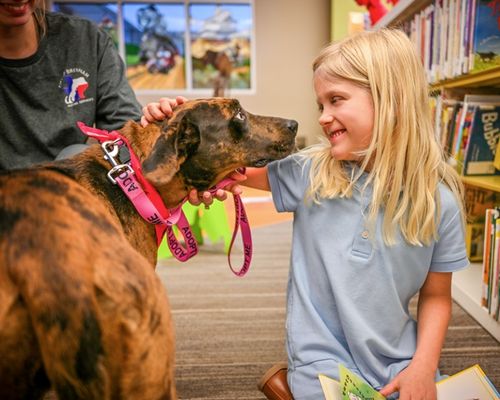
What sets it apart: The library has a professional video-recording studio, sponsored by Bluebonnet Electric Cooperative, with equipment — including a green screen — where patrons can make videos and podcasts. It also hosts a monthly reading hour complete with animals from the local shelter that are up for adoption. A monthly family law clinic is open to anyone.
Programs: Brenham library patrons can choose from many classes and groups, including teen trivia nights, writing clubs, sewing classes and a monthly teen book club. The highlight might be storytime with Louise Barbour, aka Miss Lou Lou, a master storyteller and musician who has been a library staple for more than 50 years. The library lends Chromebooks and offers Wi-Fi hotspots to those needing internet access for school or work. Grants awarded in the past decade have allowed the library to digitize microfilm from the Brenham Banner-Press.
How to get a library card: Free for Texas residents age 5+; photo ID required; parent/guardian signature required for kids under 16.
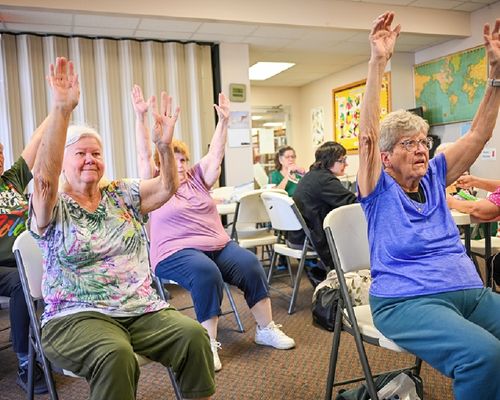
Smithville Public Library
Address: 507 Main St., Smithville
Hours: Open 10 a.m.-6 p.m. Monday and Wednesday; 10 a.m.-7 p.m. Tuesday and Thursday; 10 a.m.-5 p.m. Friday; 9 a.m.-1 p.m. Saturday; closed Sunday.
Phone: 512-237-3282, Ext. 6
Website: smithvillepubliclibrary.org
Founded in 1931 with 500 books courtesy of the Smithville Woman’s Club, the first library was on the second floor of a Main Street building. The library changed locations several times until the city assumed control, and a new building opened at Sixth and Main streets in 1971. That space has been expanded twice and today holds 62,000 materials, according to the library’s website.
What sets it apart: Even though Smithville’s library provides technology tools, Wi-Fi access and computer/internet training, it stays loyal to the old-school due-date stamp for borrowed books. “Even though we have a digital record, it’s more efficient for us,” said head librarian Judy Bergeron. The stamp serves a second purpose: helping the library track books that are not being checked out.
Noteworthy: You’ll also find a thriving garden and outdoor classroom, as well as an on-staff peer support specialist who provides mental health and social work support to community members. That resource is courtesy of a grant from the St. David’s Foundation Libraries for Health program.
Programs: With book clubs, domino clubs and reading times for visitors of all ages, Smithville’s library is a community cultural hub. Patrons can take language classes or enjoy a presentation on birds of prey from a local wildlife ecologist. Supporters have also helped spearhead a new coloring and activity book, “Smitty & Friends Explore Smithville.”
How to get a card: Apply in person with a valid photo ID showing current address; children under 16 can receive cards for internet access if a parent/guardian provides an ID; membership is free to Bastrop County residents.
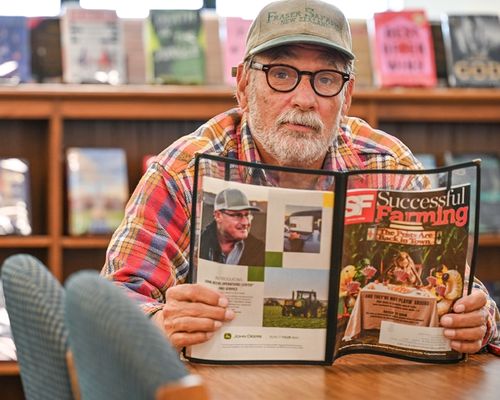
Giddings Public Library and Cultural Center
Address: 276 N. Orange St., Giddings
Hours: Open 10 a.m.-6 p.m. Monday-Friday; 10 a.m.-1 p.m. Saturday; closed Sunday.
Due to temporary closure, a limited library is available Monday through Friday 10 a.m.-6 p.m., Saturday 10 a.m.-1 p.m. at Giddings Economic Development Corporation (EDC) at 924 E. Austin St, Giddings, TX 78942. Visit Giddings Public Library on Facebook for regular updates.
Phone: 979-542-2716
Website: giddingspubliclibrary.org
The library was opened in 1920 by the Giddings Study Club, which started with donated books. It was originally housed in the post office, then in a nearby drugstore. The library was purchased by the city in 1938. Today it is in a former Brookshire Brothers grocery store building.
What sets it apart: Jessi Akins, the Giddings Public Library director, took the helm of this 19,000-square-foot facility in 2020. Known as “the biggest little library in Texas” by many, the library produces a quarterly magazine, Between the Lines. It maintains cultural exhibits, including a Native American artifact collection donated by Arnold Smith, a former longtime Bluebonnet Electric Cooperative employee and utility pole digger, and the Hilton Lee Smith Collection, recognizing the Giddings-born baseball star of the 1930s and ’40s who reached the National Baseball Hall of Fame in 2001. The library also has board games and a genealogy room filled with local yearbooks and other research materials.
Programs: Every September the library hosts the Texas Word Wrangler Book Festival, featuring Texas authors. It also hosts children’s storytime, a monthly community book club with in-person discussion, and other interactive activities such as a puzzle swap.
How to get a library card: Provide a valid Texas photo ID with current address (or other proof of address); free for Giddings residents, $2 for Lee County residents, $10 for other Texas residents; card is valid for two years; $2.50 replacement fee.
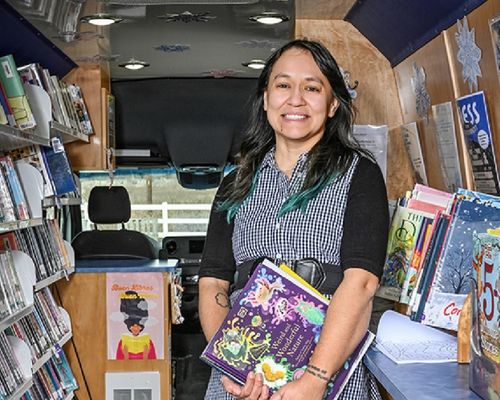
parent information and even plant seeds to designated locations.Details are at dvlibraries.org.
Garfield Library
Address: 5121 Albert Brown Drive, Del Valle
Hours: Open 9 a.m.-5 p.m. Monday-Friday
Phone: 512-247-7371
Website: dvlibraries.org
Established in 2010, the Garfield Library is the second in the East Travis Gateway Library District, formed in 2006 to serve surrounding communities. The district’s first library in Elroy opened in 1983. The libraries offer books to residents of Del Valle, Elroy, Creedmoor, Pilot Knob, Garfield, Cedar Creek and other nearby locations.
What sets it apart: The building dates to 1892, starting as a school. Del Valle ISD closed the school in 1966. The building sat vacant on the north side of busy State Highway 71 until it reopened as a library in 2010. The library offers public computers and notary services, as well as a mobile library outreach program that includes a bookmobile and home delivery for cardholders who live within 10 miles of Elroy.
Programs: In addition to a monthly book club for adults, this library hosts a Spanish-language Babies and Books hour on Fridays, a chess club and seasonal arts and crafts, such as tie-dyeing. The Book-a-Librarian program can schedule a one-on-one session to help visitors learn how to use a particular tool or service.
How to get a library card: Government-issued photo ID required; card valid for two years; minors ages 5-17 can have joint accounts with a parent/guardian.
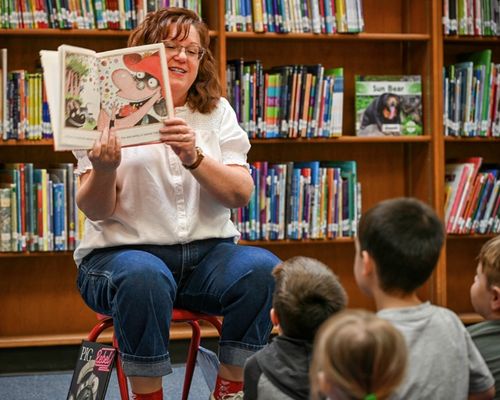
Bellville Public Library
Address: 12 W. Palm St., Bellville
Hours: Open 1:30-5:30 p.m. Monday; 9:30 a.m.-5:30 p.m. Tuesday-Friday; 9 a.m.-1 p.m. Saturday; closed Sunday.
Phone: 979-865-3731
Website: bpltx.org
Established in 1886 during a boom period in Austin County after the railroad reached the town. The library was built a year before the county courthouse.
What sets it apart: With one of the largest collections of Austin County historical records, the library draws genealogical researchers. It is also one of the few community libraries that offers free membership to anyone in the state. Longtime librarian Jenell Zettel said that for many decades the library has had a memorial program allowing people to designate a book or books in someone’s honor. “Some people will buy a specific book in the person’s honor, or, if they give money, we go and buy a nice set of books with their names in it,” Zettel said.
Programs: In addition to summer reading and children’s reading programs, the library offers the popular Kanopy streaming service and in-person events, like magic shows.
How to get a library card: ID and proof of address required; free for any Texas resident over 18; one card per address.
J.B. Nickells Memorial Library
Address: 215 S. Pecan Ave., Luling
Hours: Open 8 a.m.-6 p.m. Monday; 8 a.m.-7 p.m. Tuesday; 8 a.m.-6 p.m. Wednesday-Friday; 9 a.m.-1 p.m. Saturday; closed Sunday.
Phone: 830-875-2813, Ext. 1
Website: cityofluling.net/214/Public-Library
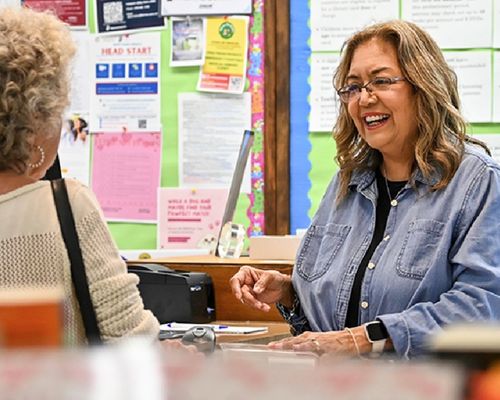
The library was established in 1969. Now, every Tuesday evening, visitors can find engaging adult programming, from community poetry to an adult coloring club.
What sets it apart: Teen- and kid-focused activities are on Thursdays, movie nights on Mondays and folks socialize over games on Friendly Fridays. Librarian Dayton Bailey said the consistent programming keeps people coming back. “I have a second-grader and a fifth-grader playing Life here right now,” he said on a recent Friday.
Programs: Patrons can read e-books via the Libby app and explore a genealogy collection overseen by Caldwell County’s Genealogical & Historical Society, which is headquartered in the library. Around the holidays, the library hosts recipe and cookie swaps, and new craft activities are planned for this year.
How to get a library card: Requires valid ID and proof of current address; free for Luling residents and those living within 20 miles.
Round Top Family Library
Address: 206 W. Mill St., Round Top
Hours: Open 1:30-5:30 p.m. Monday; 10 a.m.-5:30 p.m. Tuesday-Thursday; 10 a.m.-3 p.m. Friday; 10 a.m.-2 p.m. Saturday; closed Sunday.
Phone: 979-249-2700
Website: ilovetoread.org
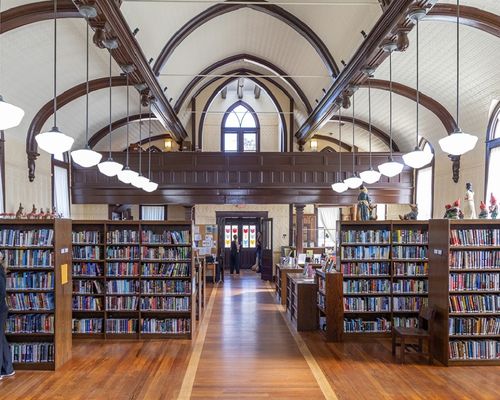
Opened in 2000, the almost entirely privately funded library has become a pillar of this corner of Fayette County, with a robust slate of programs that includes one of the largest free after-school programs in the county, according to Katey Crowley, executive director. Monday through Thursday, a bus ride from the local school to the library is provided for students who participate in activities. The library also hosts classes during the day for homeschoolers in subjects including sign language, quilting and theater. A new children’s wing is scheduled to open in 2026.
What sets it apart: With five buildings sitting on around four acres, this isn’t just a library — it’s a community center. The library started as a modest children’s library in the historic Rummel Haus, which dates to 1872. The library has grown, and now the Main Library, located in the restored church, allows it to offer activities for adults and children alike, including mahjong classes, community fitness groups and a lecture series, to name a few.
Programs: Classes for adults include mahjong, yoga, a monthly garden workday, computer instruction, senior gaming parties and social hours. There are also book clubs, lectures, author visits and — for more than 20 years — a fundraiser chili cook-off every January and an annual gala at the Windy Knoll Ranch venue in Round Top.
How to get a library card: Valid ID and proof of address required; free for residents.


